
Where will it compete?
Destination country, retail or food-service channel, target consumer, use occasion and intended product positioning.
Develop cereal products around the target market, recipe direction, ingredient proportions, flavour, physical form, texture and packaging requirements.
ODM development starts with the customer’s product brief. The discussion defines the target market, cereal category, grain base, ingredients, flavour, sweetness, shape, cluster structure, crunch and packaging before the technical route is confirmed.
Formulation options are reviewed against ingredient availability, process feasibility and the intended sensory profile. Samples are evaluated with the customer, then the final recipe, product specification and packaging details are agreed for scale-up.
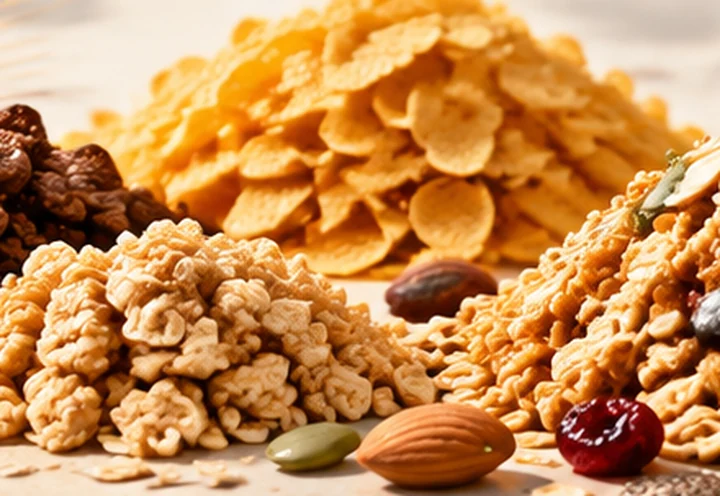
Ingredient and formulation options may include oats, grains, seeds, nuts, dried fruit, freeze-dried fruit pieces and freeze-dried yoghurt pieces, subject to the product brief and sourcing specification.
Concept · Ingredients · Sensory targets · Specification
A structured brief helps define the formulation, sample requirements, process route and information needed for a commercial specification.
Destination country, retail or food-service channel, target consumer, use occasion and intended product positioning.
Granola, Oat Crunch, Whole-Wheat Crisps, Corn Flakes, Puffed Cereals, Oatmeal, Mixed Grain Cereals or Instant Grain Products.
Ingredient proportions, flavour, sweetness, cluster size, piece shape, crunch, crispness and preparation performance.
Retail pouch or bulk bag, target pack weight, customer-supplied or sourced packaging material, label language and handling requirements.
Review the target market, product category, commercial objective and the requirements already known.
OUTPUT / PROJECT BRIEFDiscuss recipe direction, ingredient choices, flavour, shape, texture, preparation and packaging considerations.
OUTPUT / DEVELOPMENT DIRECTIONReview sample expectations, sensory feedback, specification gaps and any testing or documentation needed.
OUTPUT / REVIEW NOTESConfirm the agreed product specification and assess the manufacturing and commercial requirements for the next stage.
OUTPUT / SCALE-UP BRIEF
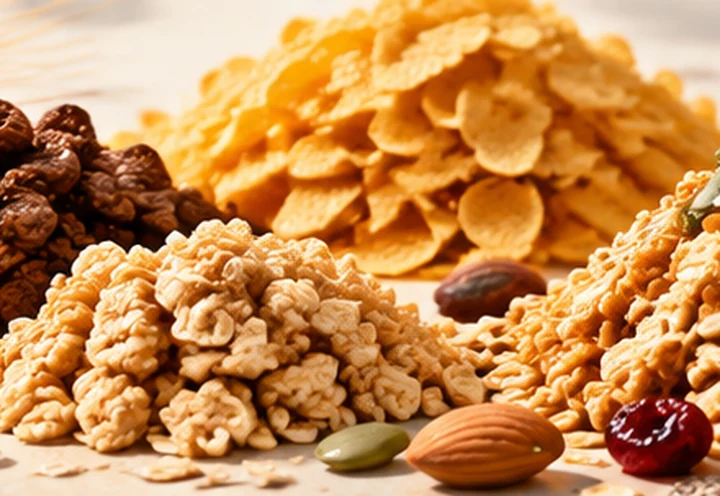
The finished cereal is shaped by the interaction of grain composition, ingredient ratios, particle size, forming or extrusion, baking, inclusions and packaging. Development therefore considers the full product system rather than flavour alone.
A successful sample must translate into a repeatable production specification. Scale-up review aligns the formulation with twin-screw extrusion, corn-flake processing, low-temperature baking or other suitable cereal-processing routes, then confirms packaging, quality controls and commercial requirements.
Product concepts can be discussed as ODM projects. The feasible scope depends on the target product, ingredient requirements, process route, sample needs and commercial conditions.
Yes, an existing recipe or product specification can be reviewed as the starting brief for an OEM or related manufacturing discussion. Technical feasibility and any required adjustments must be assessed.
Shelf life is established using the final formulation and packaging through product-specific shelf-life assessment. The approved period is confirmed only after the relevant study and supporting evidence are reviewed.
Formulation options can be reviewed against the target market’s ingredient, allergen, nutrition, labelling and import requirements. Any product claim must be supported by the final recipe and relevant evidence.
Share your market, product direction and the details you already know.